Jiayang Huang
New media artist and academic researcher working across artistic practice, technological media and psychoanalysis.
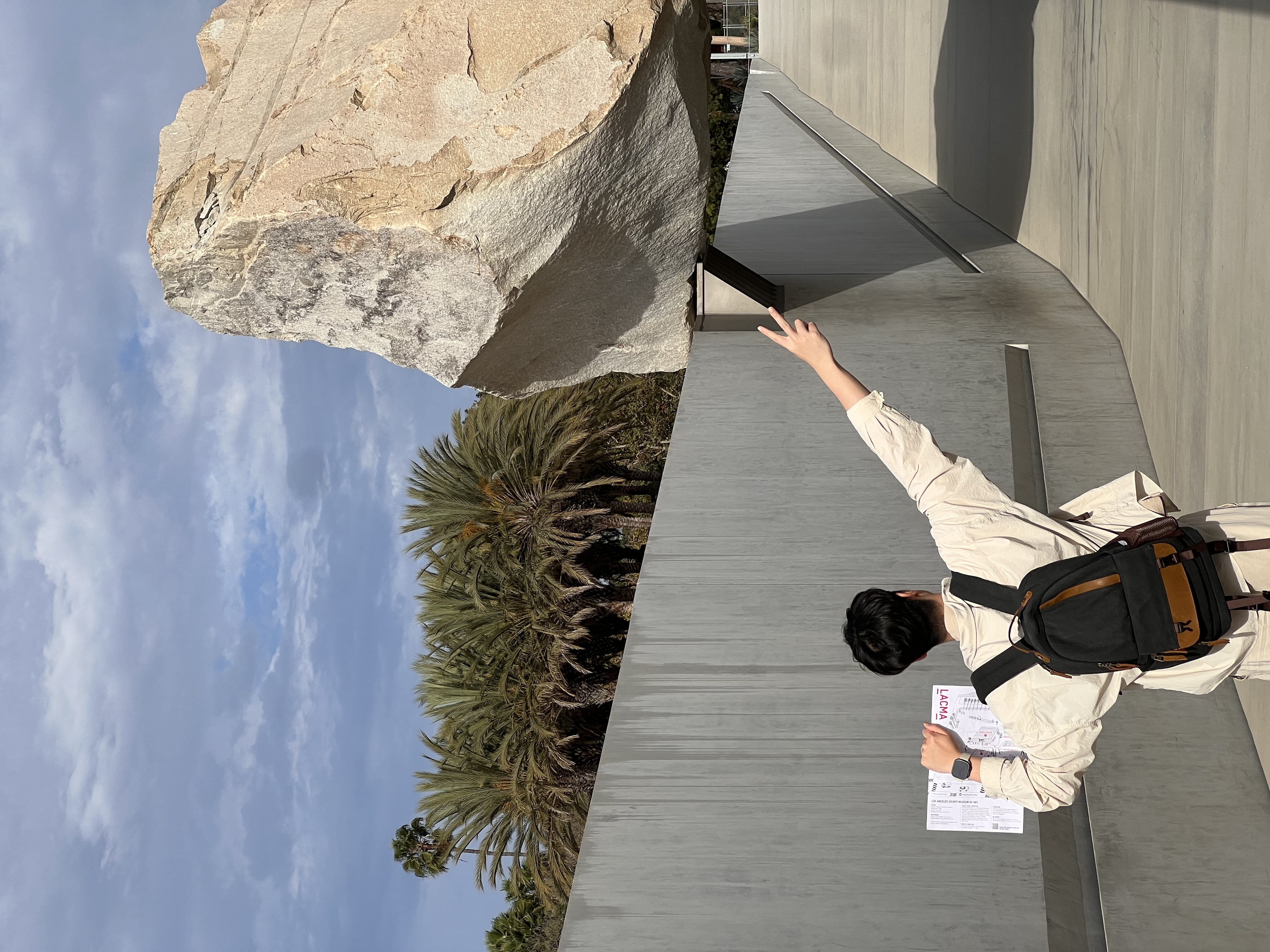 PORTRAIT / PERSONAL ARCHIVE
Art + Tech + Psycho
Jiayang is a China-born new media artist and academic researcher. He earned his BFA from the Luxun Academy of Fine Arts and received an MFA from the Maryland Institute College of Art. He is currently pursuing a PhD in Computational Media Art at the Hong Kong University of Science and Technology (Guangzhou). His research bridges artistic practice, technological media, and psychoanalysis, with a focus on AI and the unconscious. His works have been shown in museums and film festivals in China and internationally, including Ars Electronica (Linz), SNU Museum of Art (Seoul), and the Silesian Science Festival (Katowice). His academic publications have appeared at conferences such as ACM SIGGRAPH, IEEE VISAP, and AI-Art.
Research areas
ART + RESEARCHAI-driven art
Exploring AI-related artistic practices in which intelligent systems operate as creative media, collaborators, and subjects of critical enquiry.
Immersive + interactive media
Using XR, virtual production, and interactive installations to construct embodied and spatial forms of narrative.
Dream research
Investigating dream visualisation, unconscious imagery, and machine-mediated interpretation through practice-led research.
Digital cultural heritage
Developing digital approaches to calligraphy, Eastern aesthetics, and the creative interpretation of Chinese cultural heritage.
Course statement
TEACHING POSITIONThis course is designed to help students develop their own projects and artistic practices, particularly by establishing distinctive methods and workflows through collaboration with AI. It responds to a rapidly changing technological environment by asking how artists can preserve and strengthen human agency and autonomy while working with intelligent systems. AI is not positioned as the opposite of the human, nor is it treated as a substitute for artistic judgement. Instead, students are encouraged to locate their own position, responsibility, and value within human–AI collaboration, and to turn that understanding into a reflective, sustainable, and personally meaningful way of working.